Rejuran vs PDRN: Which Is Better for Your Skin? A Brisbane Guide
If you have been comparing Rejuran vs PDRN, you are not alone. It is one of the most common questions we hear at our Brisbane clinic.
Quick Summary
- Rejuran and PDRN both come from purified salmon DNA, so they belong to the same family of skin ingredients.
- Rejuran is a polynucleotide (PN) treatment made of longer DNA chains, designed to support skin structure and hydration.
- PDRN uses shorter DNA fragments and is studied mainly for how it may support the skin’s own repair signals.
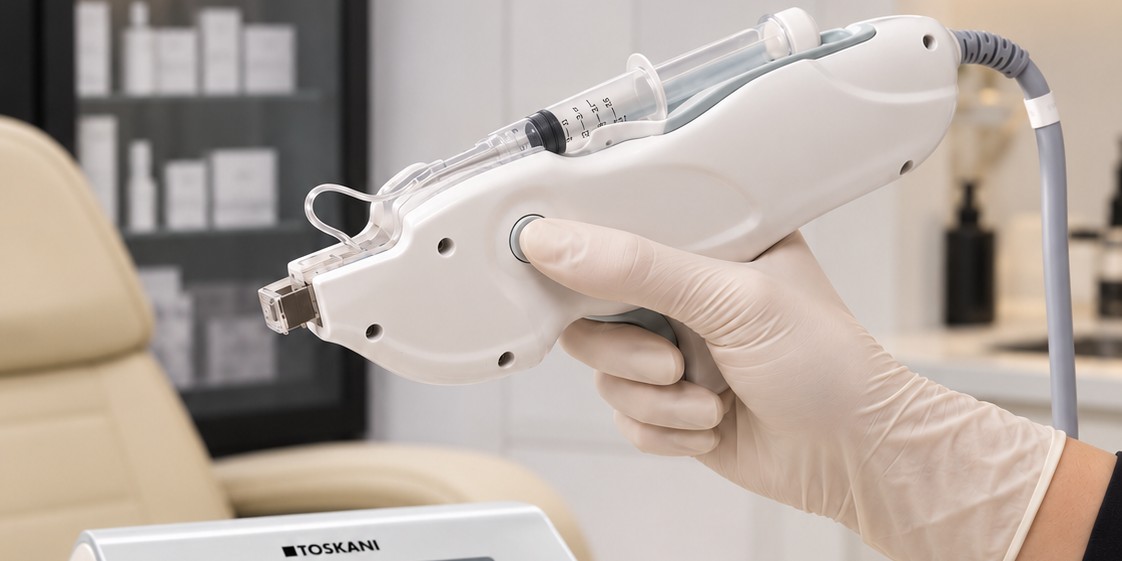
- At our Brisbane clinic, PDRN is applied with the MesojectGun, a needle free delivery system.
- Neither is “better” for everyone. Suitability is always determined at consultation.
Short Answer
Neither is better across the board. They are closely related, but they work in slightly different ways and are delivered differently. Rejuran may suit skin that needs more support for texture and resilience, while PDRN may suit someone wanting a gentler, needle free approach focused on hydration and overall skin quality. Which one is right for you, if either, is decided at a consultation.
Understanding Skin Quality and Repair
What is skin quality?
Skin quality describes how the skin looks and behaves, rather than the shape of the face. It includes how smooth the surface feels, how well the skin holds water and how quickly it recovers from everyday stress.
It varies from person to person. Changes in skin quality are usually linked to a gradual reduction in collagen and elastin, a slower rate of cell renewal and a skin barrier that loses water more easily.
Why these changes happen
From our mid twenties, fibroblasts (the cells deep in the skin that produce collagen) gradually become less active. Sun exposure, pollution, stress and sleep add to this over time.
It is worth remembering that healthy skin still has texture, visible pores and natural variation in tone. The aim of skin quality treatments is to support how the skin functions, not to make it look filtered.
Who typically asks about Rejuran and PDRN
Most people who ask us about these treatments are noticing changes in texture or fine lines, want skin that feels more hydrated and comfortable, or want to support skin that has been through a demanding period. Some are in their twenties and thinking about prevention. Others are in their forties or fifties and focused on gradual renewal.
What Are Rejuran and PDRN and How Do They Work?
Rejuran and PDRN are both regenerative skin treatments made from purified DNA fragments, usually sourced from salmon or trout. The main difference is the length of those DNA chains, which influences how each one behaves in the skin (Kim, 2025).
The mechanism, explained clinically, then simply
Clinically:
PDRN (polydeoxyribonucleotide) is a mixture of shorter DNA fragments. Its proposed action is through adenosine A2A receptors, which are involved in calming inflammation and supporting tissue repair. Its fragments may also supply building blocks that cells can reuse through what is called the salvage pathway (Squadrito et al., 2017).
Rejuran is a polynucleotide (PN) product made from longer DNA chains. Longer chains form a more viscous gel that is thought to support hydration and the extracellular matrix, the supportive framework that surrounds skin cells (Kim, 2025).
In plain terms:
Think of PDRN as a signal and Rejuran as a scaffold. PDRN is designed to encourage the skin’s own repair processes, while Rejuran also provides a supportive structure within the skin as it works. Both are designed to support your skin’s natural renewal over weeks, rather than changing how it looks overnight.
What Rejuran and PDRN are not
Neither treatment adds volume or changes facial features, and neither is designed to produce an immediate or dramatic change. They are also not a substitute for a clinical assessment or a consistent home care routine.
Rejuran vs PDRN for Common Skin Concerns
Texture and fine lines
Because Rejuran is placed directly within the skin, it may suit patients whose main focus is texture, fine lines or areas where the skin is naturally thinner, such as around the eyes. PDRN may also support a smoother looking surface over a course of treatment, with changes that tend to be more subtle.
Hydration and comfort
Both ingredients are associated with hydration. Rejuran’s longer chains help hold water within the skin, while PDRN’s repair signalling may suit skin that feels reactive or easily stressed. Some patients begin to notice their skin feeling more comfortable over the course of treatment.
Delivery and downtime
This is often where the decision becomes clearer. Rejuran is delivered within the skin by your practitioner, which can leave small temporary marks afterwards.
At our Brisbane clinic, PDRN is applied with the Toskani MesojectGun, a needle free mesotherapy system. It uses controlled electrical pulses (electroporation) to temporarily increase skin permeability and support topical delivery. How much reaches the deeper layers this way is still being studied, so we see it as a gentler option rather than a like for like replacement.
Who Rejuran or PDRN May Be Suitable For
Based on clinical assessment, Rejuran or PDRN may be considered for patients who want to support long term skin quality, prefer gradual and cumulative improvement, and are looking for minimal downtime.
Rejuran may be considered when more structural support is the goal. Needle free PDRN may be considered for patients who prefer to avoid needles or who want a gentler starting point.
Because both are derived from fish DNA, we always ask about fish or seafood allergies and any history of skin sensitivity. Pregnancy, active skin infection and certain medical conditions may also mean treatment is not appropriate.
It is not appropriate for every patient or every skin condition. Suitability must always be assessed individually.
What to Expect from Rejuran and PDRN Treatments
Sessions and spacing
Both treatments are usually planned as a course rather than a single appointment, with sessions spaced a few weeks apart. The number of sessions depends on your skin and goals, and a single session is not expected to show the full benefit.
Downtime
After Rejuran, it is common to see small raised marks where the product was placed, which typically settle within a day or so. Mild redness or tenderness can also occur.
After needle free PDRN delivery, some patients notice temporary redness or warmth that usually settles within a few hours. Your practitioner will talk you through aftercare.
Results timeline
Early changes, such as skin feeling more hydrated, may be noticed within the first few weeks. Changes in texture and overall skin quality tend to develop gradually over the course of treatment. Individual responses vary.
Maintenance
Some patients choose occasional maintenance sessions to support their progress. This is discussed as part of a longer term skin plan, alongside your home care.
So, Which Is Better? The Clinical Approach at Glow Up Clinic
The honest answer is that the better option is the one that suits your skin. Rejuran and PDRN are related tools, and in some plans they may be used at different stages.
That is why we start with a consultation and skin assessment first. This allows us to assess your skin in detail, understand your concerns and determine whether Rejuran, PDRN or another approach is suitable for you. From there, we develop a plan that is aligned with your skin, rather than following a trend or a fixed protocol. You can also read more in our guide, What Is Rejuran?
Book a Consultation at Glow Up Clinic, Brisbane
If you are weighing up Rejuran vs PDRN and are not sure where to start, we would love to help. Book a consultation at Glow Up Clinic in Brisbane and we will assess your skin, answer your questions and walk you through your options.
Ready when you are
Not sure where to start? That's exactly what a consultation is for.
630 Wynnum Rd, Morningside QLD 4170- Monday
- 10:00–17:00
- Tuesday
- 10:00–17:00
- Wednesday
- 10:00–17:00
- Thursday
- 11:00–19:00
- Friday
- 10:00–17:00
- Saturday
- 10:00–14:30
- Sunday
- Closed
Appointments only, no walk-ins
References
1. Kim ST. Comparison of Polynucleotide and Polydeoxyribonucleotide in Dermatology: Molecular Mechanisms and Clinical Perspectives. Pharmaceutics. 2025;17(8):1024. View study
2. Squadrito F, et al. Pharmacological Activity and Clinical Use of PDRN. Frontiers in Pharmacology. 2017;8:224. View study